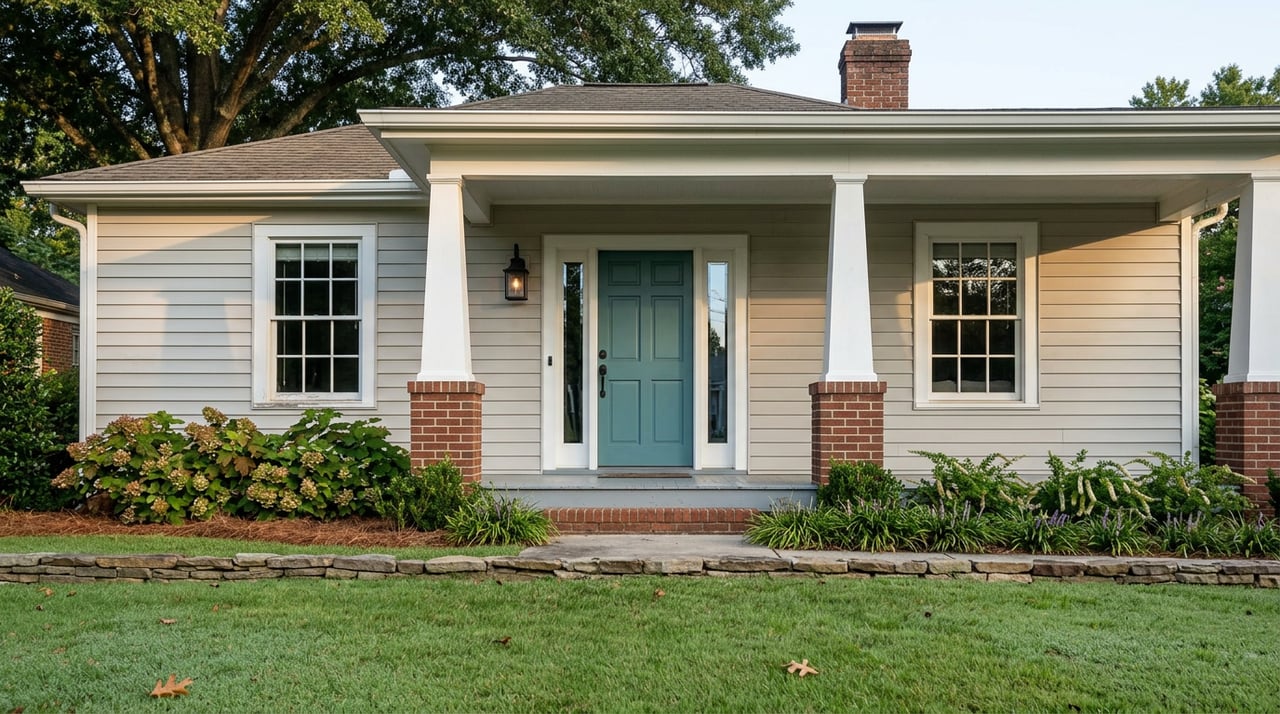
What Davidson Historic District COA Changes Mean for Buyers
August 20, 2026
August 20, 2026
You found the house. Maybe it's a bungalow on Concord Road with battered porch piers and a hip roof, or a Queen Anne two blocks off North Main with a wraparound porch that needs work. Before you sketch the addition in your head, there's a question worth asking that has nothing to do with square footage: what does the Town of Davidson currently allow you to do to the outside of this house, and who decides?
That question got more complicated recently, not less. On July 16, 2025, the Davidson Historic Preservation Commission adopted a full rewrite of the Design Standards governing the town's Local Historic District, replacing a document that had guided renovation decisions since 2009. That rewrite is now just over a year old. If you're comparing your plans to a neighbor's approved porch rebuild from three years ago, you're comparing them against a rulebook that no longer exists in its old form. The reassurance a seller or contractor might casually offer, that the house down the street got its addition through without a fight, doesn't tell you much about how review works under the version of the rules that's actually in effect today.
Most buyers hear "historic district" and assume one designation covers Davidson's old core. In practice, two separate designations overlap, and only one of them regulates what you can do to a house.
The Davidson Historic District listed on the National Register of Historic Places covers a wide area, roughly bounded by North Main and Beaty streets, Catawba Avenue, Mock and Concord roads, and Pat Stough and Dogwood lanes, encompassing 394 contributing buildings across downtown and the residential blocks around Davidson College. That listing is largely honorary. It documents the town's history and can unlock certain tax incentives for income-producing rehabilitation, but it does not by itself require anyone to ask permission before replacing a window.
The smaller, separately mapped Local Historic District is the one with legal weight. The Town of Davidson draws the distinction plainly: the local overlay carries the legal provisions that guide historically sensitive repairs and construction, while the broader National Register boundary does not. A property can sit inside the National Register district and outside the local overlay entirely, meaning its owner faces no Certificate of Appropriateness requirement at all. Before you assume a house carries review obligations, or assume it doesn't, confirm which of the two lines it actually falls inside. The Davidson Planning Department can answer that in one phone call.
Inside the local overlay, most exterior work needs a Certificate of Appropriateness before anything else, including before you apply for the standard building permit that would otherwise be your first stop. Routine maintenance, repainting trim in the same color, patching siding with matching material, is exempted. Nearly everything that changes how the house reads from the street is not: new windows, a rebuilt porch, an addition, a fence. If you're not sure whether a project counts, town staff will tell you before you've spent money on plans that might need to change.
Once a project needs a COA, it follows one of two tracks, and the gap between them can add two months to a renovation timeline that has nothing to do with financing or inspections.
| Minor Work COA | Major Work COA | |
|---|---|---|
| Who decides | Planning staff | Historic Preservation Commission, in a quasi-judicial hearing |
| When it's heard | Staff's regular review schedule | Third Wednesday of the month |
| Filing lead time | Standard staff turnaround | At least 4 weeks before the next HPC meeting |
| Public notice | Not required | Notice sign posted on-site, letters mailed to adjacent owners |
| If staff can't approve it | Converts to Major Work | Already at the Commission stage |
The conversion clause is the part that catches buyers off guard. If a contractor submits a project as Minor Work and staff finds it conflicts with the new Design Standards, the application isn't simply denied. It gets bumped to Major Work, which means it now waits for the next available Historic Preservation Commission agenda, and that Commission meets once a month. Miss this cycle's four-week filing window and the earliest available hearing can be six or seven weeks out, before accounting for any revisions the Commission asks for once you're in front of it.
The local overlay is compact by design: the downtown core, part of the historic Davidson College campus, and the residential blocks along North Main Street and Concord Road, plus older sections around Delburg, Watson, and Armour streets where cotton-mill housing once stood. Walk those blocks and you pass individually designated landmarks: the Davidson Cotton Mill at 209 Delburg Street, the Armour-Adams House at 626 North Main Street, Restormel at 829 Concord Road.
That landmark list keeps growing. The John Eli Brattain House at 305 South Main Street and the Armour Street Mill House at 225 Armour Street were both designated in the second half of 2024, and the Davidson Baptist Chapel on Armour Street followed in October 2025. This isn't a frozen inventory of buildings someone catalogued decades ago. Individual landmark status can attach to a property mid-tour, and with it comes eligibility for an ad valorem tax deferral, up to 50 percent of the property tax on the structure, 30 percent if only the exterior is designated. That's a detail worth confirming directly with the town rather than assuming a listing has flagged it.
Some of this friction surfaces after closing rather than before it. If a previous owner rebuilt a porch, swapped windows, or added a room without pulling a Certificate of Appropriateness, that gap doesn't disappear at the closing table. A county building permit on file doesn't confirm the exterior work also cleared design review, and the two records live in different places.
Two widely used data sources don't fully agree right now, and the disagreement itself is useful. One platform's August 2026 snapshot put Davidson's median list price at roughly $737,000, up about 14 percent year over year, with homes sitting a median of 89 days before going under contract, essentially flat compared to August 2025. Another source's closed-sale data for the three months ending in May 2026 told a cooler story: a median sold price of $685,000, down slightly from the same period a year earlier, with days on market stretching to 63 from 48 the year before.
List prices climbing while closed prices soften and time on market lengthens is not a contradiction so much as a signal. It suggests sellers are testing higher numbers than the recent closed market has actually supported. For a buyer weighing a historic district property, that gap is room to work with: room to pull COA history, confirm which overlay a parcel sits in, and check whether a planned project reads as Minor or Major Work before writing an offer, rather than feeling pressured to skip those steps to keep pace with a market that looks hotter on the surface than its recent closings suggest.
Does painting my house require a Certificate of Appropriateness? Routine maintenance, repainting in the same color with matching materials, generally does not. Changing the color, especially on masonry, can cross into work that needs review. Confirm with town staff before you buy paint.
How long does Major Work COA review actually take? Plan on the four-week filing deadline before the Historic Preservation Commission can hear the application, plus the fact that the Commission meets only once a month, on the third Wednesday. If revisions are requested, add another full cycle.
Does National Register listing alone mean I need a COA? No. The National Register designation is a largely honorary federal and state listing. Only Davidson's separately mapped Local Historic District carries the zoning overlay that triggers a Certificate of Appropriateness requirement.
Can an already-approved COA transfer to me as the buyer? Ask directly. Whether an approved but unstarted project carries over with a sale is a question for the Planning Department and your closing attorney, not an assumption to make on your own.
Davidson's historic core rewards patience with character you can't get from new construction: mature trees, a walkable relationship to Main Street, houses with real history attached to real addresses. None of that changes. What changed is the rulebook underneath it, and the buyers who do best here are the ones who ask the review questions before they fall for the porch.
Melody Fuhr works with buyers across the Lake Norman corridor who want more than a walkthrough. If a property inside Davidson's historic district has caught your eye, schedule a White-Glove Consultation and get a straight answer on what that addition, that new porch, or that garage apartment idea would actually require before you write an offer.
This article is general information, not legal, tax or financial advice. Consult a qualified professional about your situation.
Stay up to date on the latest real estate trends.
October 22, 2026
October 15, 2026
October 8, 2026
October 1, 2026
September 24, 2026
September 17, 2026

September 10, 2026

September 3, 2026

August 27, 2026
Get assistance in determining current property value, crafting a competitive offer, writing and negotiating a contract, and much more. Contact me today.